
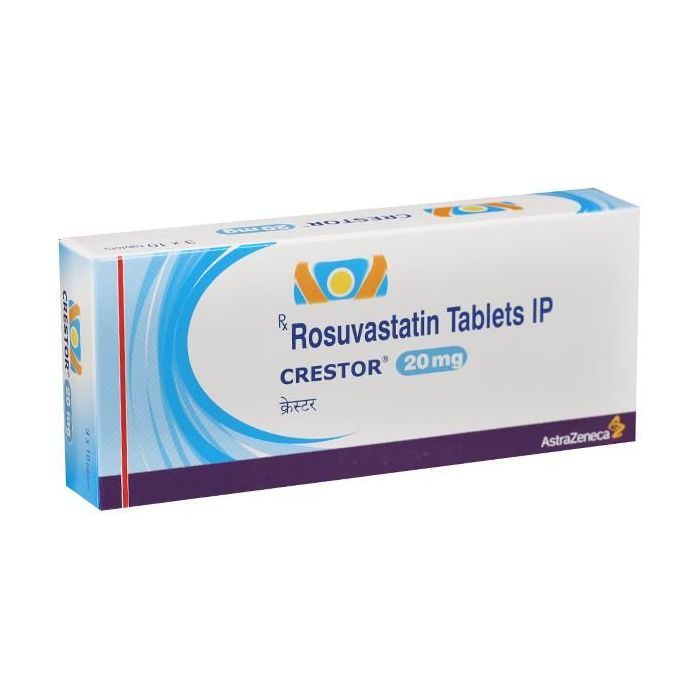
Crestor 20 Mg Tablet
Starting at just $66.78
In stock
Only %1 left
SKU
CMS6700
Crestor 20 mg Tablet is a prescription lipid-lowering medicine used to treat High Cholesterol (Hypercholesterolemia) and High Triglycerides in adults. It also helps reduce the risk of Heart Attack and Stroke in patients with cardiovascular risk factors. The active ingredient is Rosuvastatin (20 mg), an FDA-approved salt belonging to a class of medicines called HMG-CoA Reductase Inhibitors, more commonly known as statins.
AstraZeneca, a globally recognised GMP-certified manufacturer, makes this medicine. Rosuvastatin works by blocking an enzyme in the liver called HMG-CoA reductase, which is responsible for producing cholesterol. This reduces low-density lipoprotein (LDL) cholesterol and triglycerides, while moderately raising high-density lipoprotein (HDL) cholesterol.
Take this medicine once daily, with or without food, at the same time each day. Always follow the dose and duration prescribed by your doctor. Most people with High Cholesterol have no symptoms, but stopping treatment without medical advice may cause cholesterol levels to rise again. If a dose is missed, take it as soon as possible. However, do not take two doses within 12 hours of each other.
Common side effects of Crestor include muscle pain, nausea, headache, and weakness. Contact your doctor if muscle pain is unexplained or severe, or if you notice yellowing of the skin or eyes. Inform your doctor about any liver or kidney disease or diabetes before starting treatment. Store below 30°C, away from heat, moisture, and sunlight. Keep out of reach of children.
Rosuvastatin provides proven cardiovascular protection through targeted cholesterol management.
Key benefits include:
Crestor 20 mg Tablet is a prescription medicine that should be taken exactly as directed by a doctor. However, general guidelines include:
Crestor is available in 20 mg and 40 mg strengths at Cheap Medicine Shop. For those looking for a more affordable Rosuvastatin 20 mg tablet alternative with the same active ingredient, consider the following after discussing with your doctor:
| Roseday 20 mg Tablet | $4.80/10 tablets |
| Rosubest 20 mg | $10.50/10 tablets |
Most side effects are mild and tend to resolve as the body adjusts to treatment. Common Crestor 20 mg Tablet side effects include:
These effects often ease over time. Seek prompt medical attention if you notice unexplained muscle pain, dark urine, yellowing of the skin or eyes, or signs of an allergic reaction such as facial swelling or difficulty breathing.
 Liver Disease
The liver processes Rosuvastatin, and this medicine is not recommended in patients with severe or active liver disease. Liver function should be checked before and during treatment, and the medicine should be stopped if enzyme levels rise significantly.
 Kidney Impairment
This tablet is not recommended in severe kidney impairment. Reduced kidney function can increase drug exposure and raise the risk of muscle injury, so dose adjustment and regular monitoring are typically required based on the degree of renal impairment.
 Pregnant and Breastfeeding women
Rosuvastatin is unsafe during pregnancy and may cause serious harm to the developing baby. It should be stopped immediately if pregnancy occurs or is planned. There are no adequate studies to confirm safety during breastfeeding, so an alternative treatment should be arranged with a doctor.
 Avoid
Avoid
Do not take this medicine with Ciclosporin (oral or injectable), as this combination raises Rosuvastatin levels dangerously. Use caution alongside Nicotinic acid, Bezafibrate, or Darolutamide, as these may increase the risk of serious muscle injury. Avoid large amounts of alcohol, as it may worsen liver-related side effects.
Crestor 20 mg Tablet is a prescription statin used to lower High Cholesterol and High Triglycerides in adults, and to reduce the risk of Stroke and Heart Attack in people with cardiovascular risk factors. Rosuvastatin, its active ingredient, works by blocking the liver enzyme that produces cholesterol.
Rosuvastatin begins to lower cholesterol within about two weeks of starting treatment, and the full benefit on lipid levels is generally seen within four weeks. Regular cholesterol monitoring is recommended during this period to assess the response and guide any dose adjustments.
Yes, muscle pain is one of the most commonly reported side effects of Rosuvastatin. It may range from mild discomfort to significant weakness or tenderness. Unexplained or severe muscle pain, particularly if accompanied by fatigue or dark-coloured urine, should be reported to a doctor promptly.
No, stopping this medicine on your own when cholesterol levels improve is not recommended. Cholesterol levels remain stable only as long as treatment continues; stopping without medical guidance may allow levels to rise again. Long-term or lifelong use is often necessary, depending on individual cardiovascular risk.
No, there is no established evidence linking Rosuvastatin directly to weight gain. If weight changes occur during treatment, the cause is likely unrelated to the medicine and should be discussed with a doctor for further investigation.
No, it is not advisable to drink large amounts of alcohol while taking this medicine. Excessive alcohol consumption alongside Rosuvastatin may increase the risk of liver-related adverse effects. Any alcohol intake during treatment should be kept to a minimum and discussed with a doctor.
Rosuvastatin can be taken at any time of day, either in the morning or at night. Unlike some older statins, it does not require night-time dosing. The most important factor is consistency; taking it at the same time each day helps maintain steady drug levels in the blood.
Rarely, some patients have reported memory loss or cognitive changes while taking statins, including Rosuvastatin. These effects are generally considered non-serious and tend to resolve after stopping the medicine. Any noticeable changes in memory or thinking during treatment should be reported to a doctor for evaluation.